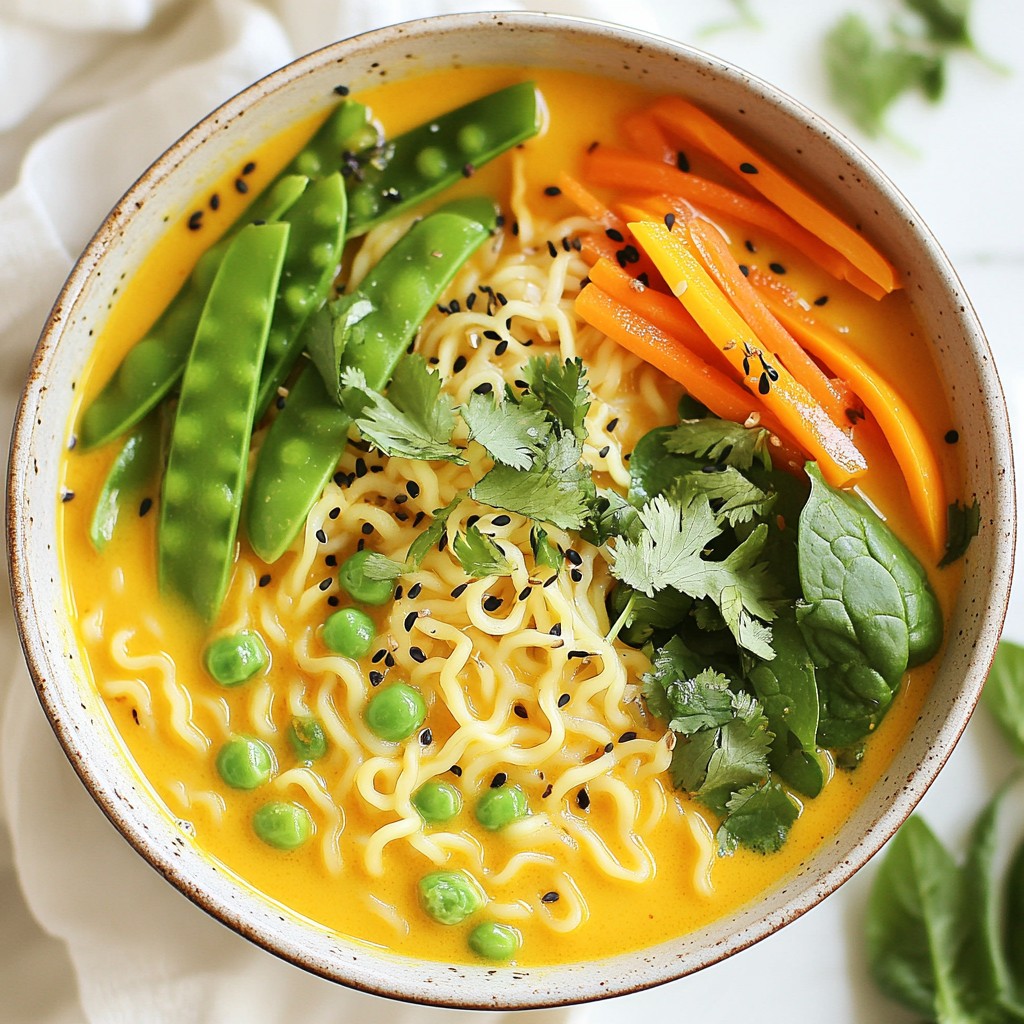
If you crave a warm bowl of comfort that bursts with flavor, you’re in the right place! My Vegan Coconut Curry Ramen is both simple and delightful. With creamy coconut milk, fresh veggies, and aromatic spices, this dish satisfies your taste buds without the fuss. Ready to elevate your meal game? Let’s dive into this easy recipe that’s perfect for any weeknight dinner!
Why I Love This Recipe
- Quick and Easy: This recipe comes together in just 25 minutes, making it perfect for weeknight dinners.
- Flavorful and Satisfying: The combination of coconut milk and red curry paste creates a rich, creamy broth that is bursting with flavor.
- Customizable: You can easily swap the vegetables for whatever you have on hand, making it a versatile dish.
- Healthy and Nourishing: Packed with fresh vegetables and nutrient-dense ingredients, this ramen is both wholesome and delicious.
Ingredients
Main Ingredients
- 200g ramen noodles
- 1 can (400ml) coconut milk
- 2 cups vegetable broth
- 1 tablespoon coconut oil
Vegetables and Aromatics
- 1 small onion, diced
- 2 cloves garlic, minced
- 1 tablespoon ginger, grated
- 1 bell pepper, sliced
- 1 carrot, julienned
- 1 cup snap peas
- 1 cup fresh spinach
Flavor Enhancers
- 2 tablespoons red curry paste
- 1 tablespoon soy sauce
- 1 tablespoon maple syrup
- 1 tablespoon lime juice
- Fresh cilantro for garnish
- Sliced green onions for garnish
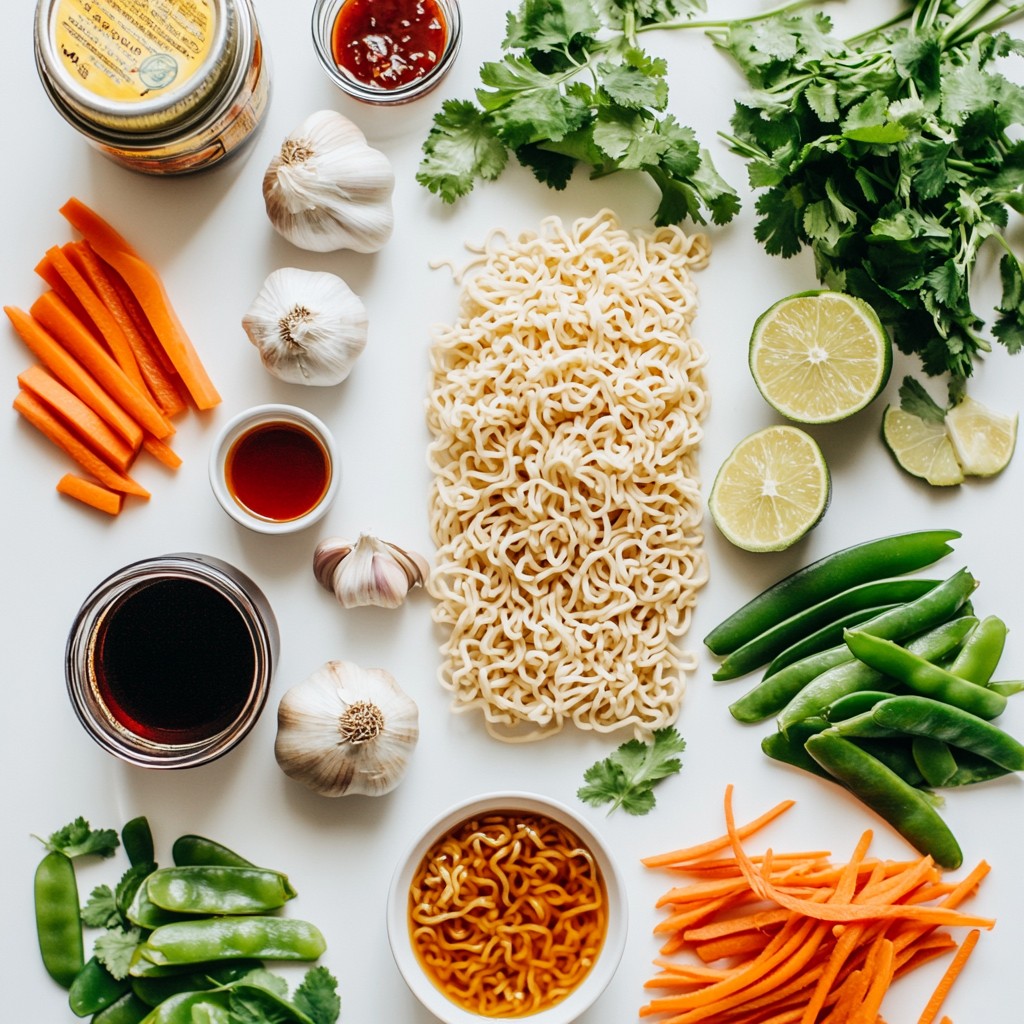
When you make Vegan Coconut Curry Ramen, you need fresh ingredients. Start with ramen noodles. They give a nice chew to the dish. Use coconut milk for creaminess. It adds a rich flavor. Vegetable broth brings depth to the curry base. Coconut oil helps sauté the aromatics and adds a light coconut touch.
Next, focus on the veggies. A small onion adds sweetness. Garlic and ginger both create a lovely aroma. They wake up your taste buds. For crunch, add a sliced bell pepper and julienned carrot. Snap peas contribute a fresh snap, while spinach wilts into the curry. This mix makes your ramen colorful and healthy.
Now, let’s talk flavors. Red curry paste is key. It packs a punch and adds heat. Soy sauce gives saltiness, while maple syrup balances it with sweetness. A splash of lime juice brightens the dish. Finally, fresh cilantro and sliced green onions make beautiful toppings. They add color and freshness to your bowl. Enjoy your vegan ramen adventure!
Step-by-Step Instructions
Preparation
First, grab a large pot and heat up the coconut oil over medium heat. Add the diced onion and sauté it for about 5 minutes, until it looks clear. This step helps build a great base for your curry. Next, stir in the minced garlic and grated ginger. Cook them for one more minute. You want to smell those lovely aromas filling your kitchen.
Now, it’s time to add the red curry paste. Stir it well with the onion, garlic, and ginger for about 2 minutes. This will let the spices bloom, making your curry rich and flavorful.
Cooking the Curry Base
After you’ve mixed in the red curry paste, pour in the coconut milk and vegetable broth. Stir everything together. Bring the mixture to a gentle simmer. This simmering stage is key. It helps all the flavors blend nicely.
Now, add in the sliced bell pepper, julienned carrot, and snap peas. Simmer this for about 5 to 7 minutes. You want the veggies to stay bright and tender, not mushy.
Combining Noodles and Garnish
While your veggies are simmering, cook the ramen noodles according to the package instructions. Drain them and set aside. Once the vegetables are tender, stir in the fresh spinach. Let it wilt in the hot curry for about 1 minute.
Finally, add the cooked ramen noodles to the curry pot. Gently toss them together so the noodles soak up all that delicious sauce. Finish your dish with soy sauce, maple syrup, and lime juice. Stir well and taste it. Adjust the seasoning if needed.
Serve hot, and don’t forget to garnish with fresh cilantro and sliced green onions for that perfect touch!
Tips & Tricks
Perfecting the Flavor
To enhance the taste of your Vegan Coconut Curry Ramen, consider adjusting the seasonings. You can add more soy sauce for saltiness or extra maple syrup for sweetness. This small tweak can change your dish's depth.
If you want a creamier base, add more coconut milk. This will make your ramen richer and more satisfying. Just a little can elevate the flavor and texture.
Meal Prep Suggestions
Prepping ingredients in advance can save you time. Chop your vegetables and store them in the fridge. This way, when you're ready to cook, everything is at hand.
Store your cooked ramen and curry separately. Keeping them apart prevents the noodles from getting soggy. Mix them together just before serving for the best texture.
Serving Ideas
Pair your ramen with side dishes like spring rolls or a fresh salad. This can make your meal more filling and fun.
For garnish, you can use fresh cilantro and sliced green onions. You could also add lime wedges for a zesty kick. These simple touches make your dish look and taste amazing!
Pro Tips
- Use Fresh Ingredients: Opt for fresh vegetables and herbs to enhance the flavor and nutritional value of your coconut curry ramen.
- Customize the Spice Level: Adjust the amount of red curry paste according to your preference for spice; start with less and add more to taste.
- Perfect Noodle Texture: Cook the ramen noodles just until al dente; they will continue to cook slightly when mixed with the hot curry.
- Garnish for Freshness: Don't skip the garnish! Fresh cilantro and green onions add a burst of flavor and color to your dish.
Variations
Protein Options
You can easily add protein to your vegan coconut curry ramen. Here are some options:
- Tofu or Chickpeas: Adding firm tofu gives a nice texture. Just cube it and toss it in when you add the vegetables. Chickpeas also work well and add fiber. You can use canned or cooked chickpeas.
- Tempeh: Tempeh is a great meat alternative. It has a hearty texture. Slice it thin and sauté it with the onions. This will add a nutty flavor to your dish.
Spice Level Adjustments
You can adjust the spice level to fit your taste. Here’s how:
- Mild vs Spicy: If you prefer a mild dish, use less red curry paste. Start with one tablespoon and taste as you go. For a spicy kick, add more paste or some chili flakes.
- Spicier Curry Paste: Look for brands that offer spicy curry paste. You can find them in most grocery stores. They are easy to use and can make your ramen pop with flavor.
Alternative Vegetable Choices
Switching up vegetables can change the flavor profile of your ramen. Here are some ideas:
- Seasonal Vegetables: Use vegetables that are in season. They taste better and are often fresher. Think zucchini in summer or kale in winter.
- Frozen vs Fresh: Frozen vegetables are quick and easy. They are prepped and ready to go. Fresh vegetables, however, can add a crunch. Try using a mix of both for great texture.
Storage Info
Refrigeration Tips
To keep your Vegan Coconut Curry Ramen fresh, store leftovers in the fridge right away. Use airtight containers to avoid moisture loss. Glass or BPA-free plastic containers work great. They help maintain flavor and texture. Make sure to cool the ramen first before sealing it up. This prevents condensation that can make your meal soggy.
Freezing Guidance
You can freeze Vegan Coconut Curry Ramen for later meals. To do this, separate the noodles from the broth and veggies. Place the broth and veggies in one container and the noodles in another. This helps keep everything fresh. Wrap the containers tightly to prevent freezer burn. When you are ready to eat, let it thaw in the fridge overnight. This is the best way to keep flavors intact.
Reheating Instructions
When you reheat the curry ramen, do it gently. Use a stovetop or microwave to warm it up. If using a stovetop, add a splash of water or broth to help it heat evenly. Stir often to avoid burning. For microwave reheating, use a microwave-safe bowl and cover it loosely. Heat it in short bursts, checking every minute. Avoid overcooked noodles by reheating just until warm. Enjoy your meal fresh and tasty!
FAQs
What type of noodles can I use for vegan ramen?
You can use various noodles for vegan ramen. I recommend using ramen noodles, which are chewy and absorb flavor well. If you need gluten-free options, look for rice noodles or buckwheat noodles. Many brands offer vegan ramen, such as Lotus Foods and Nissin's Top Ramen. Always check the labels to ensure they are vegan.
Can I make this recipe without coconut milk?
Yes, you can! If you want to skip coconut milk, try using almond milk or cashew cream. These alternatives will make your ramen lighter. However, the flavor and creaminess will change. Coconut milk gives a rich taste that adds depth. So, keep that in mind when making your choice.
How can I make this recipe spicier?
To add heat, try using more red curry paste. You can also add sliced fresh chilies or red pepper flakes. If you want more spice, toss in a dash of sriracha or chili oil. These add-ins will give your curry a nice kick. Adjust them to your taste, and enjoy the extra heat!
This blog post gave you a simple and tasty guide for making Vegan Coconut Curry Ramen. We covered the ingredients, step-by-step instructions, tips, variations, and storage information. You now know how to choose the right noodles, adjust flavors, and tailor the dish to your taste. With all these ideas, you can enjoy a warm bowl anytime. Dive into this recipe, explore the flavors, and make it your own. Happy cooking!